The same tree, set in a different spot,
changes the view — and the feeling.
Morning light through the maple. The moss deepening in colour after the rain. There is time, too, for gazing at such “views that catch the eye.”
A single tree, each stone, the way the water runs. Where you place them and how you pair them gives the garden an entirely different face. For a garden that's easy to live in, see the “Garden & Landscaping” page. For a garden that moves you to look, please see this “Landscaping & Garden Craft” page.
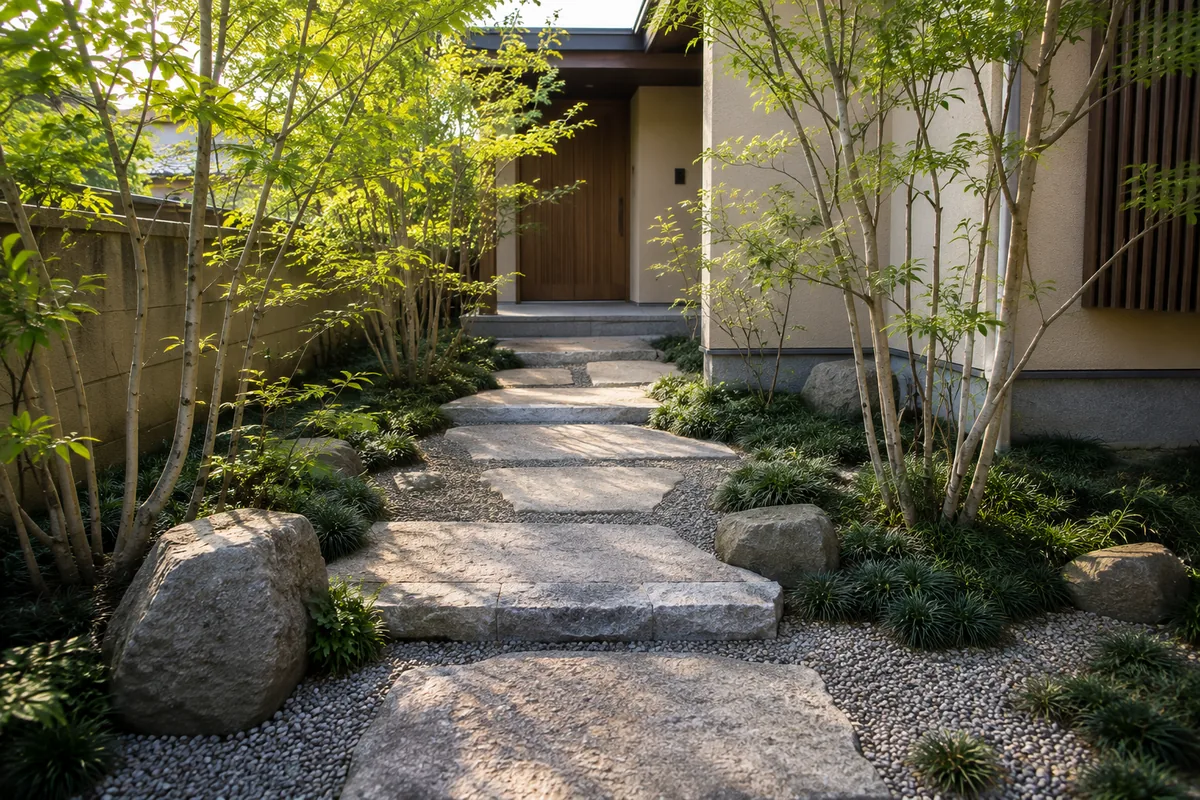
The same stone, the same tree — the way it faces, its height, what sits beside it: the look changes entirely. A “fit” that can't be settled on a drawing, only felt standing on the spot. We set it while checking with our own eyes.
The set of a stone, the sound of water, the lean of a tree. Not flashiness, but a quiet that deepens as the years pass, set with natural materials. A true Japanese garden, or a modern take on one — we treasure the “ma,” the spacing, that suits your home.
Trees grow, moss spreads, a garden slowly changes its face. Not only the day it's planted — we choose the trees and the view so they become just right some years on, the later care included.
Even a Japanese garden has many faces. Together, we find the one that suits your home and the way you live.
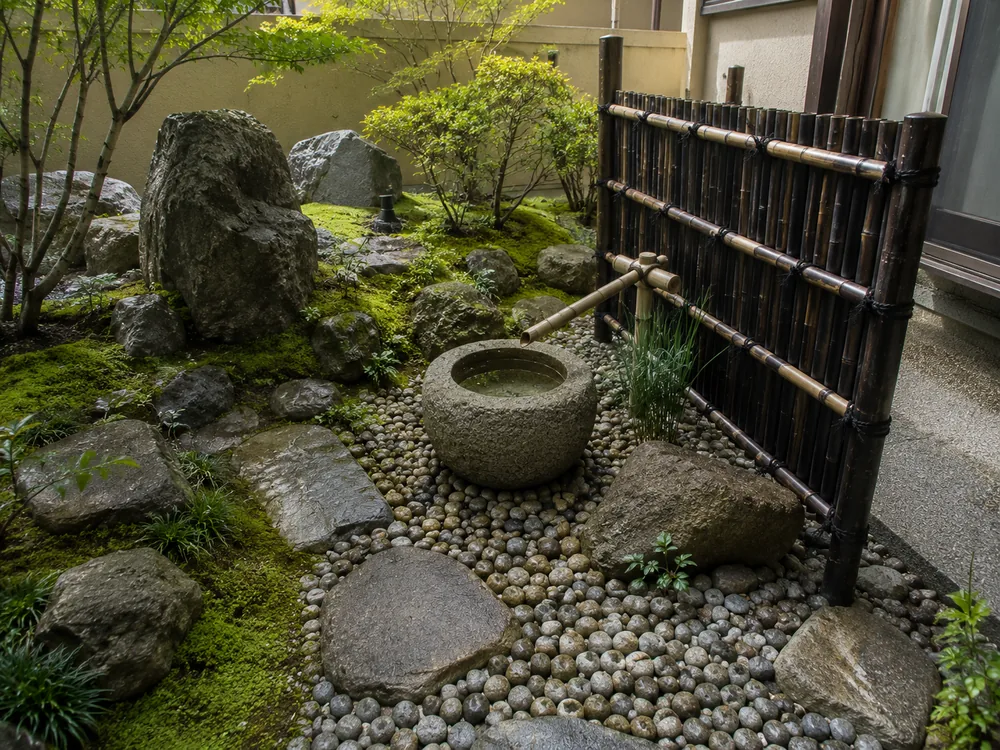
Set stones and a lantern, stepping stones and moss. A true Japanese garden that mirrors the seasons each time you look — from a corner by the entrance to a wide garden.
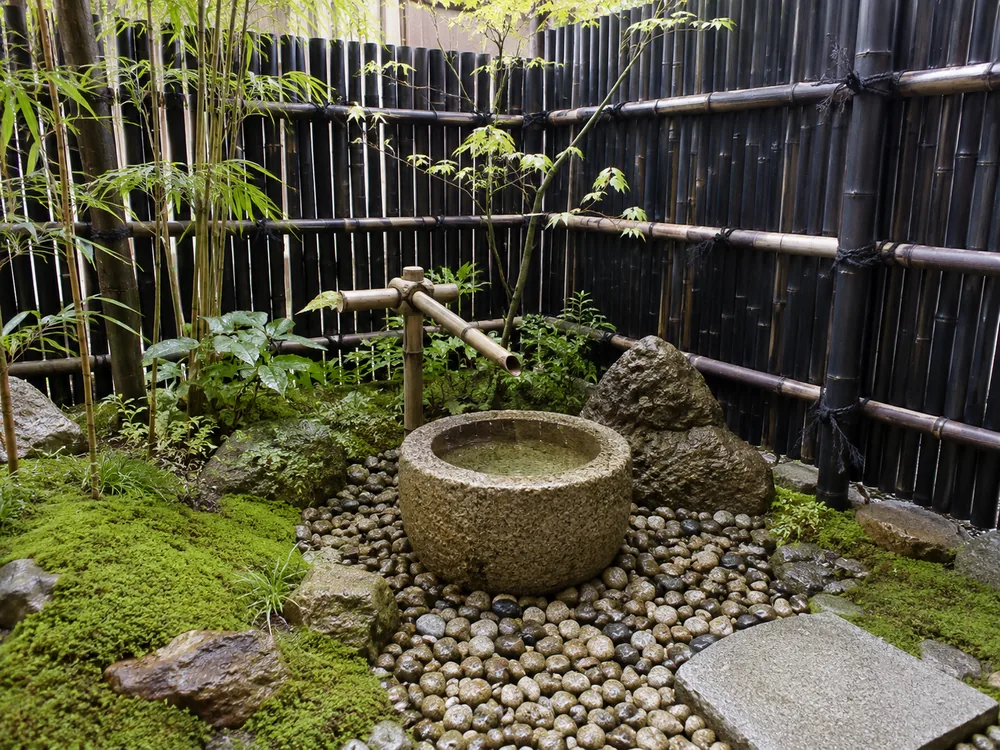
The sound of water at the basin, a fence of black bamboo. Even a small corner deepens the view you see from inside the house.
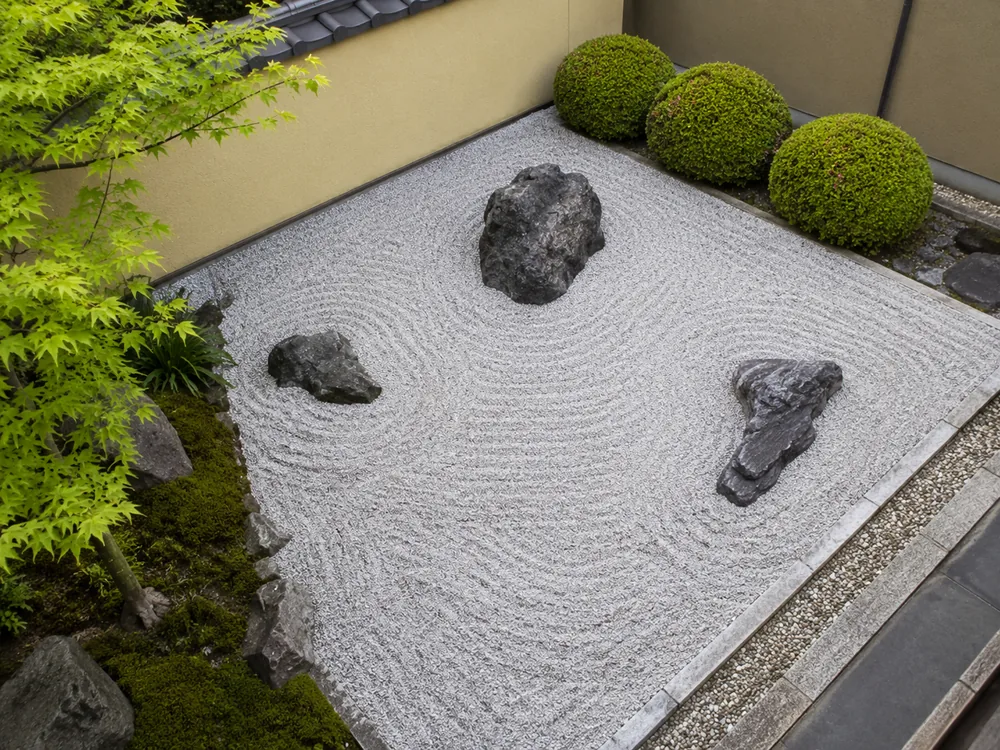
White sand raked into ripples, and set stones alone, suggest mountains and water. Its low upkeep suits life today, too.
The words that shape a garden's scenery — with a note on each. For a list of the trees themselves, see the plant dictionary in Garden & Landscaping.
Landscaping is the work of planting time in a garden.
It isn't “make it, and it's done.” Planting a tree at a young home — that is the first day of a view that will grow for decades.
Children leave, life changes, and the garden changes shape too. We re-tie an aged garden to fit how you live now. A corner grown hard to use becomes a comfortable view again — not remade whole, but continued from the garden you had.
The care has grown hard with the years. Your children live far away, and you worry that, if something happened to you, the garden would be left behind as a burden. Many people carry this quietly. But making a garden lighter is not the same as treating it poorly. We trim it to a size you can manage, take down the dangerous trees, and shape it so you can go on gazing at it with ease. It is care for the garden, and for you, for what comes next.
Before you clear it all away, just one thing. The tree your father planted, the tree planted for a child's birth — if there is one you'd like to keep, please tell us. We lift it and move it to a new place. The garden may grow smaller, but the tree that matters stays with the family. Niwa-jimai is not a farewell to memories.


* Both images are for illustration.
技と心を、かたちに。
世代を紡ぐ、贈り物。
Craft and heart, given shape.
A gift, woven across generations.
Someday, this garden too becomes a gift to someone.
With that in mind, we plant each single tree.
Roughly: a garden to spend time in is Garden & Landscaping, while setting a view that moves you to look is landscaping. The line between them is soft, though. We'll listen to how you live and find the right shape together.
Yes, very much. Even a small courtyard beside the entrance, or just a corner seen from a window, settles the whole house. Rather than making everything Japanese, adding a touch of Japanese to a Western house works beautifully too.
Yes, we take on pruning or weeding on their own. It needn't be every year — only when you need it. When a garden has grown beyond what you can handle, please call.
Yes, we re-tie it while keeping what we can, rather than remaking it whole. Just the corner that's grown hard to use, made easier to care for. Stones and trees worth keeping stay, and we shape it as a continuation of the garden you've had. This is what's called a regarden.
Yes. We trim it to a size you can manage, take down the dangerous trees, and shape it so you can go on gazing at it with ease. Making a garden lighter is not treating it poorly. We think together about a way of keeping it that doesn't weigh on you. This is what's called niwa-jimai.
Yes. The tree your father planted, a child's memorial tree — if there's one you'd like to keep, we can often lift it and move it to a new spot. The garden may grow smaller, but the tree that matters stays. We help with that kind of rework with all our heart.
Of course. There are views that shine precisely because the space is small. A one-tsubo garden seen from a window, a corner by the gate. We suggest just the right setting for the space you have.
Yes, that's something we're good at. Stones and lanterns long in a garden hold the years of that home. We reset them, or change how they're combined, keeping what you have and bringing it into a new view.
We'd love to give a figure right away, but the size of the garden and the state of the trees and stones you already have differ from home to home, so pinning down a number here would only become a promise we can't keep. Let us see the garden first, and we'll tell you a rough range on the day. Estimates are free, and we never write things up to make the figure look bigger.
We can take on most Japanese gardens, but to be straight with you — a garden of formal, heritage-level craft, or a large one with a big pond or waterfall, may suit a dedicated garden master better. What we're good at is the Japanese garden for a home, one that lives alongside you for years. Tell us first what kind of garden you picture.
Consultation and estimates are free. We tell you honestly what costs what.
“Could you do even a small courtyard?” “The upkeep has become too much” — please don't hold back. We'll think through what can be done, together.
When you call, please mention you saw our website.
