Cars roll over it, feet cross it, every day.
We make that whole surface strong, and beautiful.
The finish alone changes its whole look.
The driveway, the path to your front door, the strip that runs around the house. Concrete flatwork is the widest surface your eye takes in at home, and the one your feet touch most. When ground that used to turn to mud, or sprout weeds, becomes a single surface with the drainage thought through, everyday life gets a good deal easier.
People tend to picture "just a flat, grey surface," but in fact, how it's finished changes both the look and the feel underfoot completely. At Iwai, we suggest the finish that suits the spot honestly, including the downsides you'll live with over the years. It's strong, and easy on the budget. But over time, fine cracks can appear — and we tell you that much too, without hiding it.
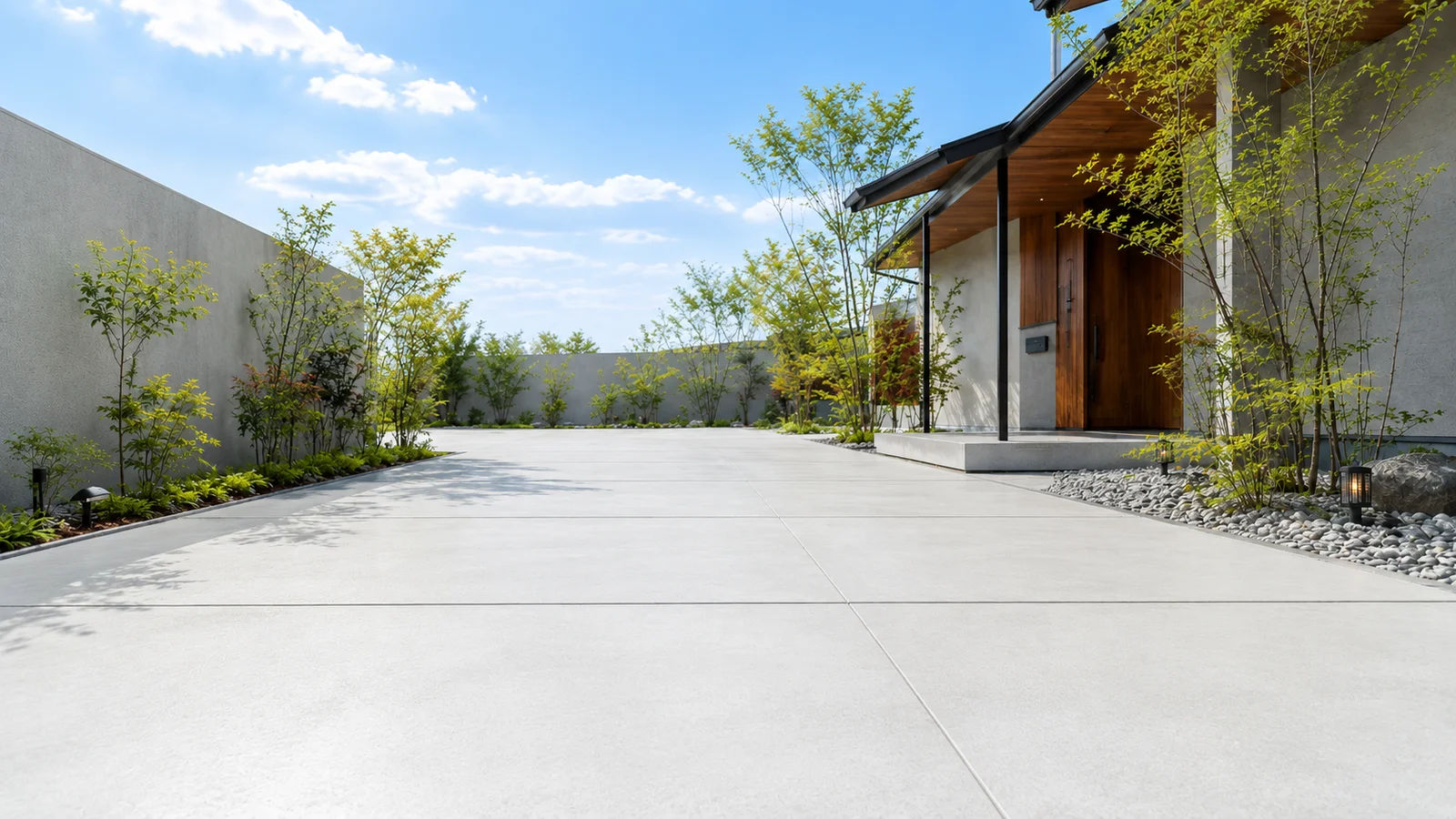
Ground that sprouts weeds and turns to mud after rain becomes, once covered in concrete, a single surface that's easy to sweep and drains well. Rather than just leveling it flat, we work out the slope so rainwater runs cleanly away. That one bit of care — leaving no puddles behind — is what decides whether it stays comfortable to use for years.
The very same slab — pressed smooth with a trowel, drawn with fine lines, or washed to reveal the pebbles within. The finish alone can make it bright and glassy, or quiet and settled. Slip resistance and how easy it is to clean change with it too, so we choose the finish that suits the spot together, weighing both the look and how it lives.
Concrete flatwork is strong and easy on the budget — but in return, fine cracks can appear as the years pass. That's the nature of the material, and it can't be avoided entirely. That's exactly why we suggest a way to live with it well over the long run — down to finishes that hide it and where to place the joints — the drawbacks laid out plainly.
Even the same "concrete flatwork" looks — and feels underfoot — quite different depending on how it's finished. Here are the three most often chosen, shown by day and by night.
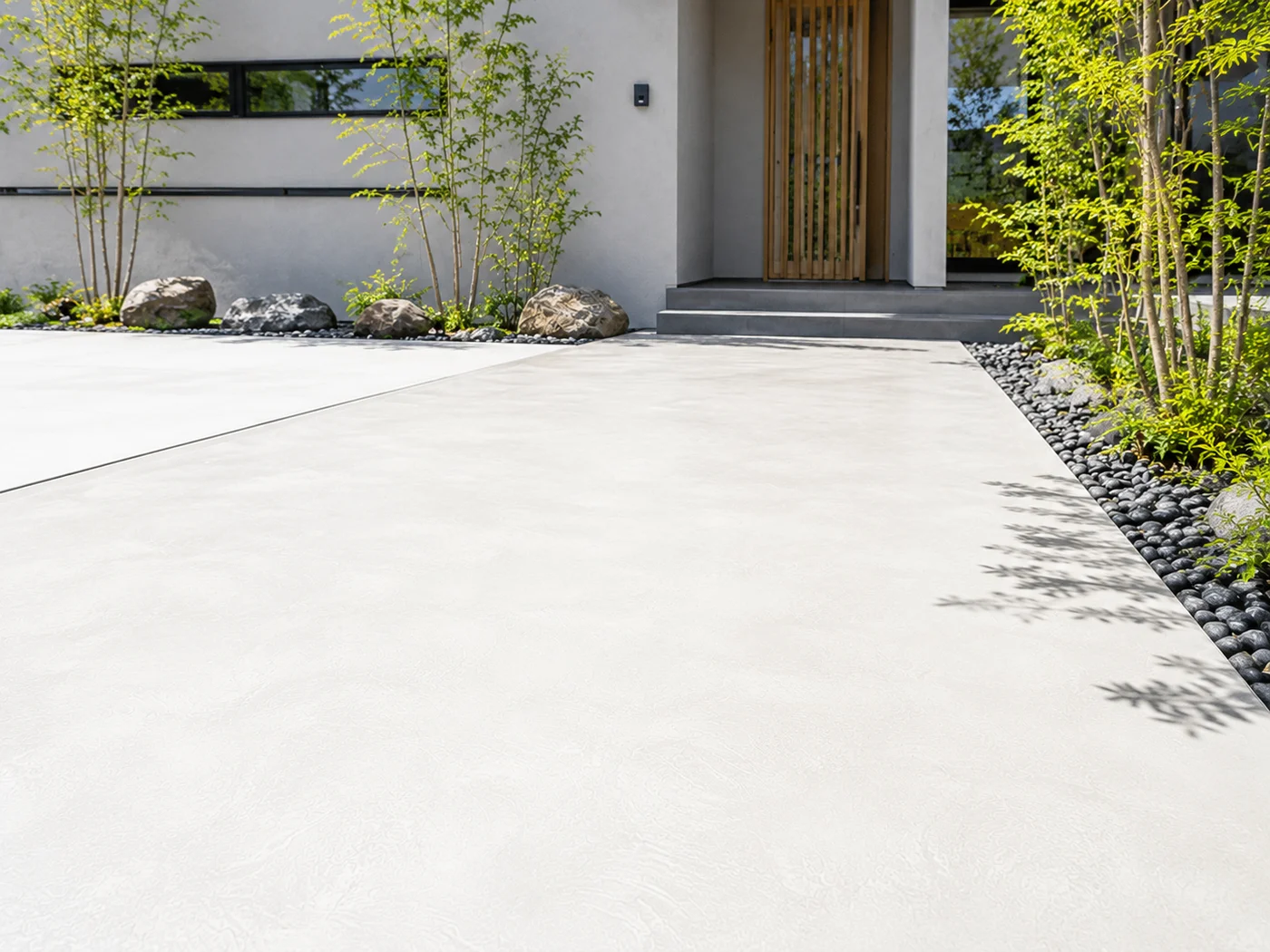
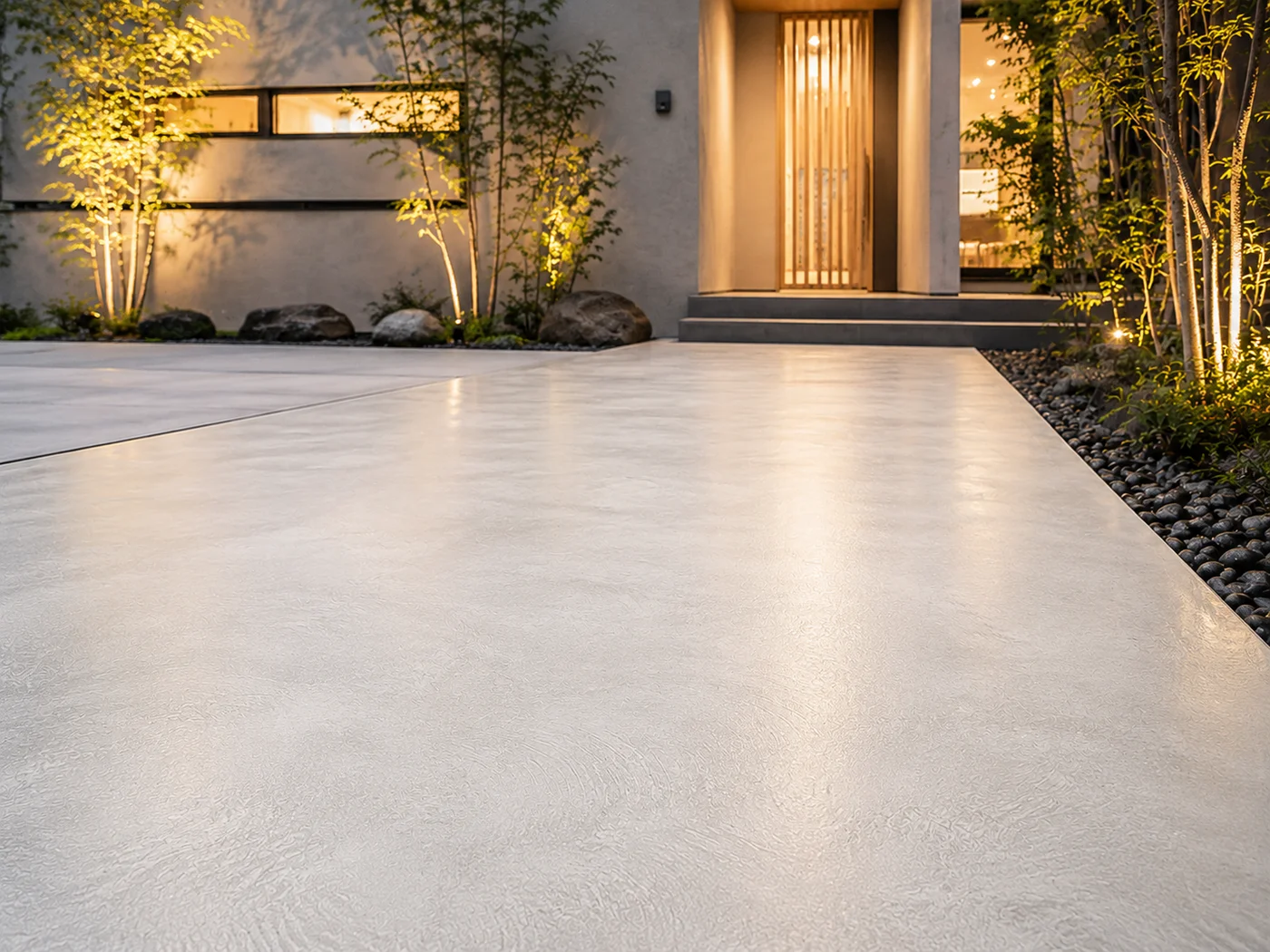
Pressed smooth and flat with a trowel, for a glassy, even surface. It looks clean and is easy to wipe down, sitting well by an entrance or on an indoor slab. It can get slippery when wet with rain or frost, though — so for a garage or a sloped spot, we'd suggest pairing it with the broom finish below.
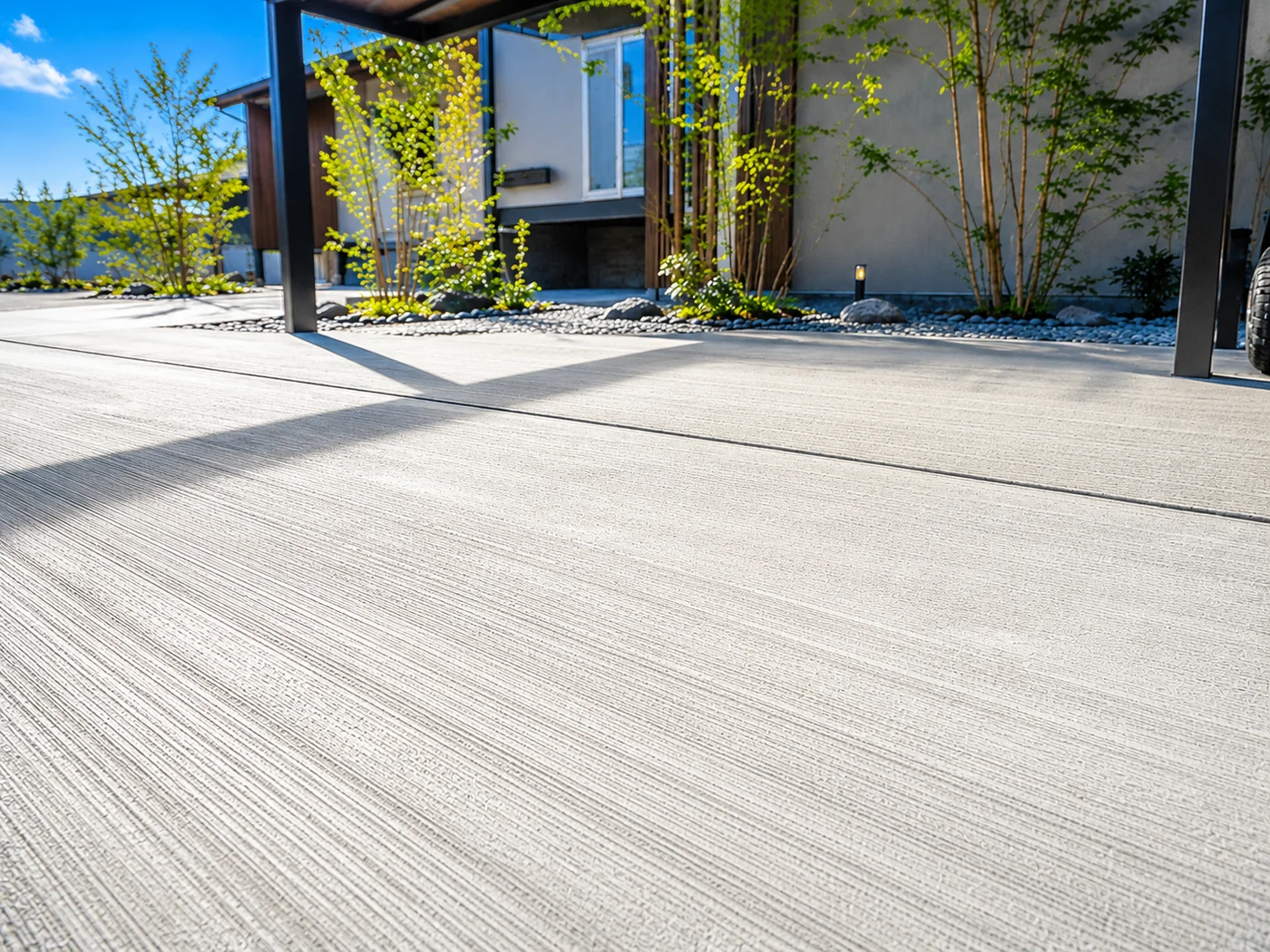
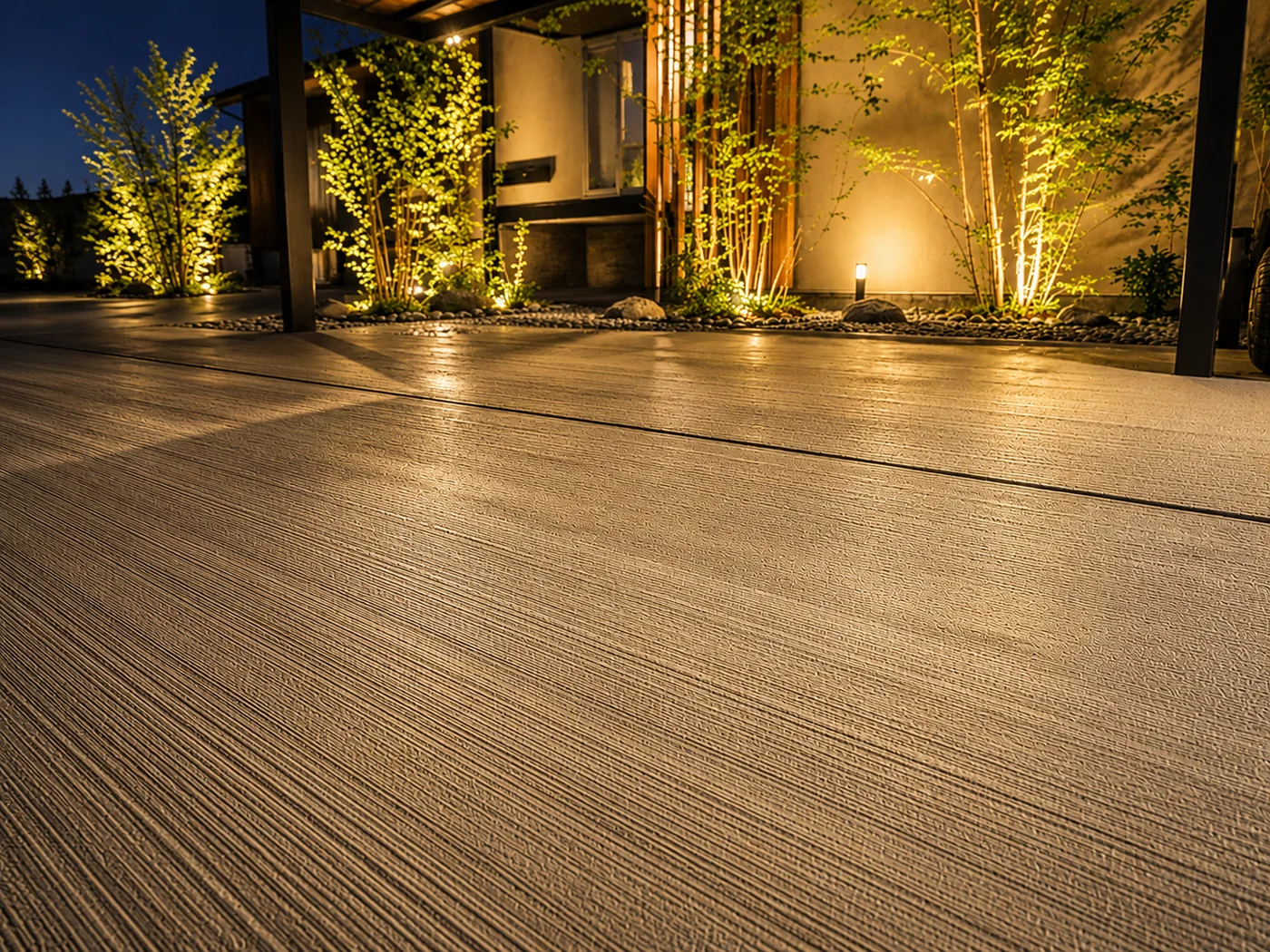
Fine lines drawn across the surface to keep it from turning slippery. Plain to look at, but highly practical — well suited to a driveway, ramp, or path that meets the rain. It's the most-chosen finish for concrete flatwork: a sturdy, long-lasting standard.
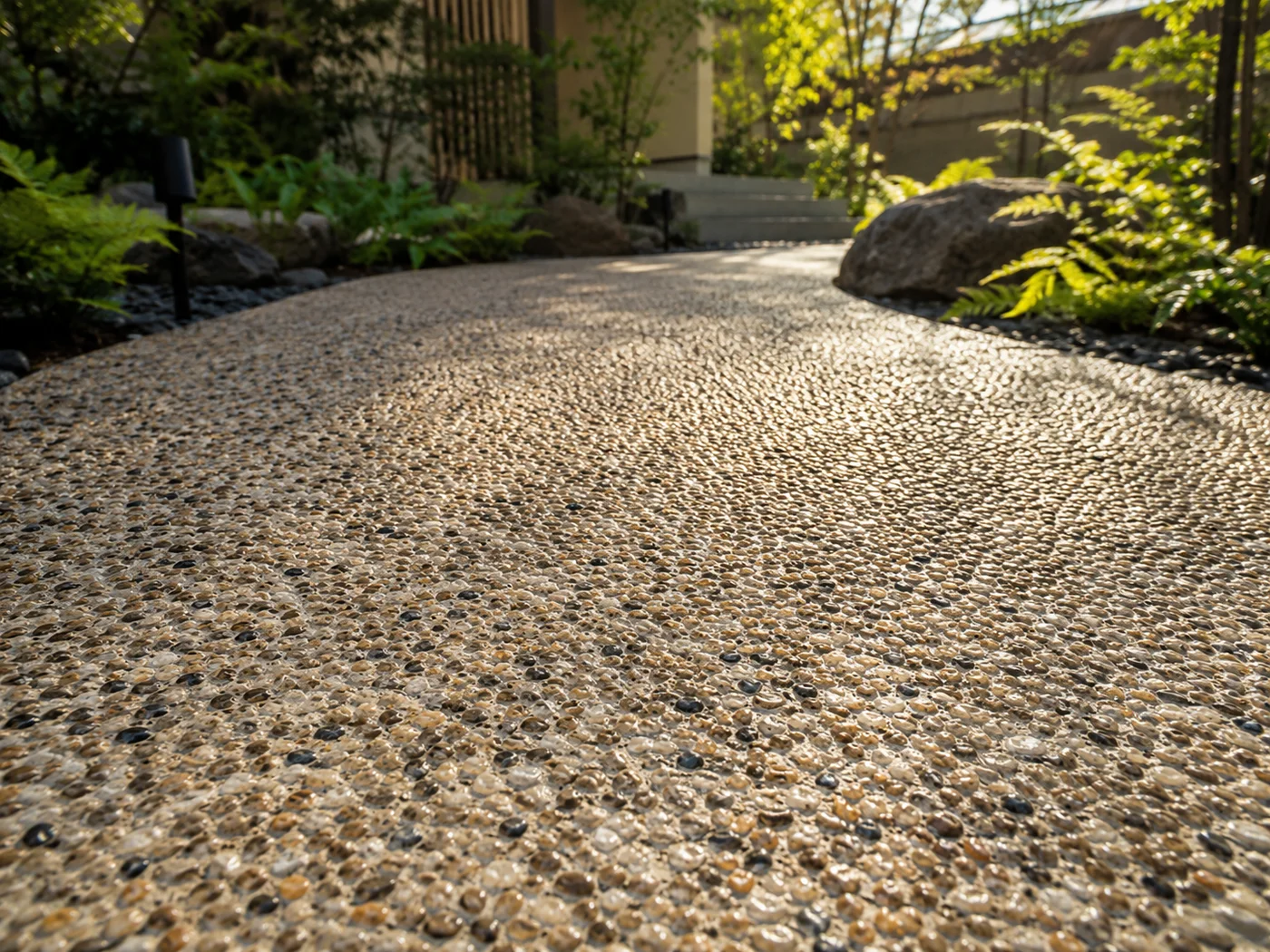
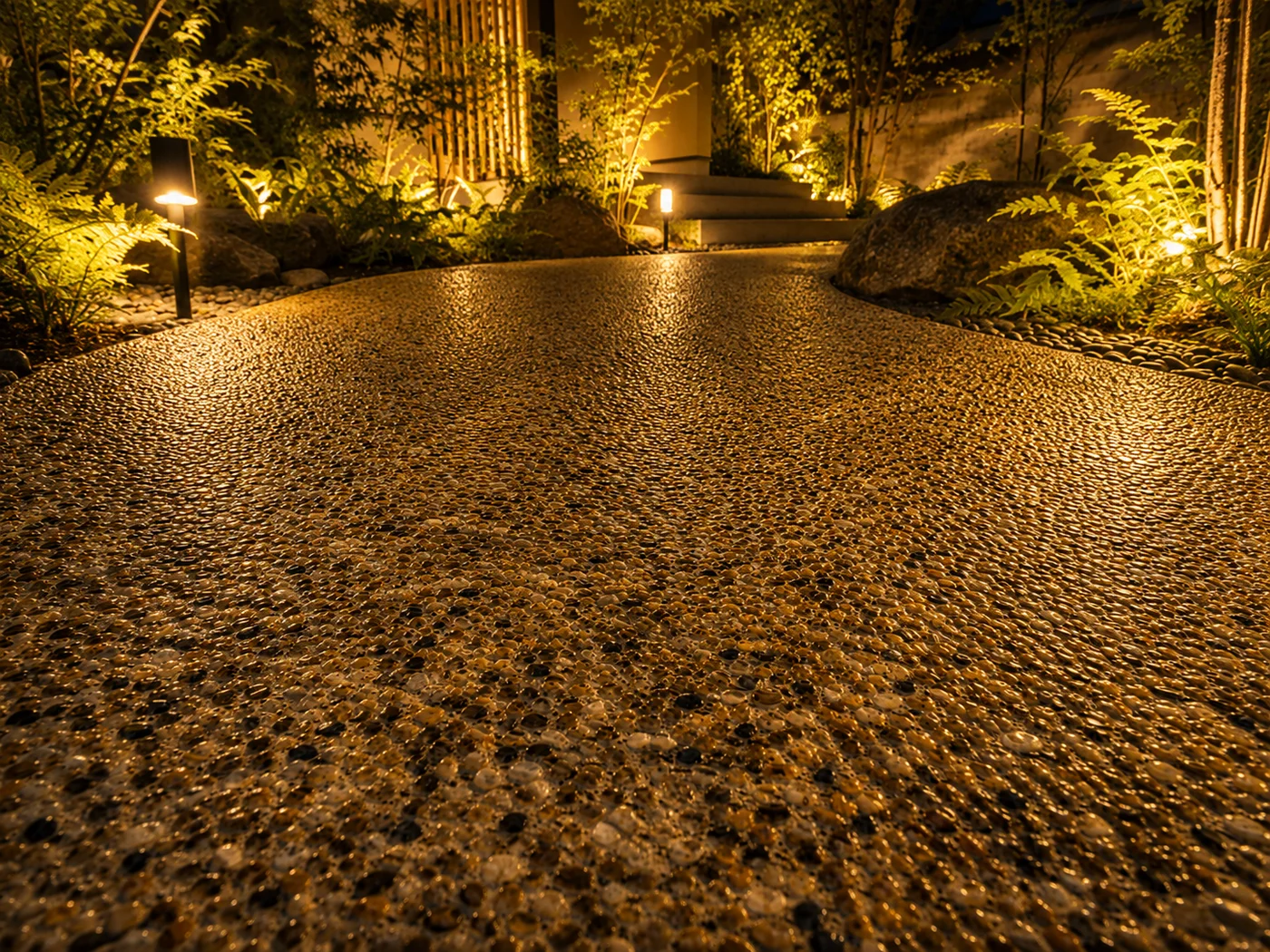
The surface is washed to bring the small stones within gently to the top. The scatter of pebbles gives a natural look that settles in with either Japanese or Western styles. Slip-resistant, and just right for a spot you want to show off — an entrance approach, or a path facing the garden — a finish with real character.
It depends on the area, the state of the ground beneath, and the finish you choose. Steel trowel and broom finishes tend to cost less, while exposed aggregate is a step up for the extra work involved. It also varies with whether the ground needs digging out or spoil hauling away — so let us see the site first. We'll tell you straight what costs what, item by item.
On the day it's poured, it hasn't set yet. A few days before it's ready to walk on, and — depending on the season — about a week before it's hard enough to take a car, to be safe. Letting it cure slowly, without rushing, is the surest way to reduce cracking and make it last. We'll tell you clearly when it's ready to drive on.
Honestly — fine cracks can appear. Concrete expands and contracts as it dries and as the temperature shifts, so by its nature it can't be avoided entirely. That said, there are ways to keep large cracks at bay: setting joints in advance to divide the surface, adding steel reinforcement, and so on. Knowing all this, we lay it in a way you can live with for the long run.
On the day the concrete is poured, we avoid rain. If heavy rain hits right after pouring, the surface roughens and it shows in the finish. That's why we set the day watching the weather, and depending on the forecast we may have to ask you to put it off. We understand the wish to get it done — but please take it as important waiting time, for a clean surface that lasts.
It comes down to convenience versus longevity. Off-the-shelf quick-set products are handy over a small patch, but a wide surface, or one a car sits on, needs thickness, strength, and a drainage slope. Poured concrete — built up from the base, with reinforcement and slope all set right — resists cracking and holds for far longer. For a surface a car rolls over every day, laying it properly is well worth it.
Yes, we do. We break up and remove the old slab, redo it from the base, and pour a fresh one. Depending on its condition, we can sometimes pour over the top, so let us see your current slab first. From how the cracks run and how it's tilted, we judge whether to break it out and repour or make use of what's there, and suggest the approach with no waste.
Yes, a floor-only job is perfectly fine. Skip the carport but turn a muddy driveway into a proper slab; firm up a weed-plagued patch by the garden — we get a lot of these requests. We finish it with the drainage slope worked out, so puddles won't be left standing after the rain. From a single slab, we're glad to take it on.
If you're weighing it up alongside a carport, do have a look at "Carports & Parking" as well.
We'll take on the usual decorative finishes — broom, exposed-aggregate, slit joints and the like — but for elaborate work such as stamped concrete, a firm that specialises in it may give a cleaner result. What we're good at is an honest slab: strong against rain, slow to crack, and long-lasting. Tell us what you'd like, and we'll point you to whichever suits.
We can, but we do avoid the days of hard frost — if it freezes, the concrete weakens as it sets. If you're in a hurry we'll work around it, and when it's a case of a little wait giving a cleaner finish, we'll tell you why.
Consultations and estimates are free. We'll tell you straight what costs what.
"Steel trowel or broom — which suits our place?" or "I'd like to firm up a muddy patch by the garden" — please don't hold back. We'll think through the finish that suits the spot, together.
When you call, just mention you saw us on the website.
